Escape the Legacy
Touting Contentstack as a digital experience platform, not just a CMS, proved to be a unique marketing opportunity for the team. Leveraging our own tech, we created immersive, compelling digital experiences to show, not just tell, customers and prospects the power of our platform. Gamification was at the top of our list.
An escape game was conceived, meant to complement a competitor takeout campaign targeting monoliths. The initial idea was to challenge users to escape, room by room, the legacy platform by going through their pain points literally. While direct, the game was complex, bland visually, and frankly, no fun.
I was tapped to revamp the concept, execute the creative, and ensure it was feasible enough to bring to life. Hating the thought of representing an actual escape room visually, I rethought the narrative. Instead of a room, I envisioned users being transported inside a legacy software world, à la Tron. Each level would be a unique world, where users play familiar arcade games laddered to the pain point we were trying to bring home. Instead of focusing on the literal, I moved the game into the metaphorical world, where my imagination could run wild.
Once users complete all three levels, they win the game and Escape the Legacy.
Role Creative Director and Game Strategist, leading a team of Art Directors, Animators, and Developers
INSPIRATION
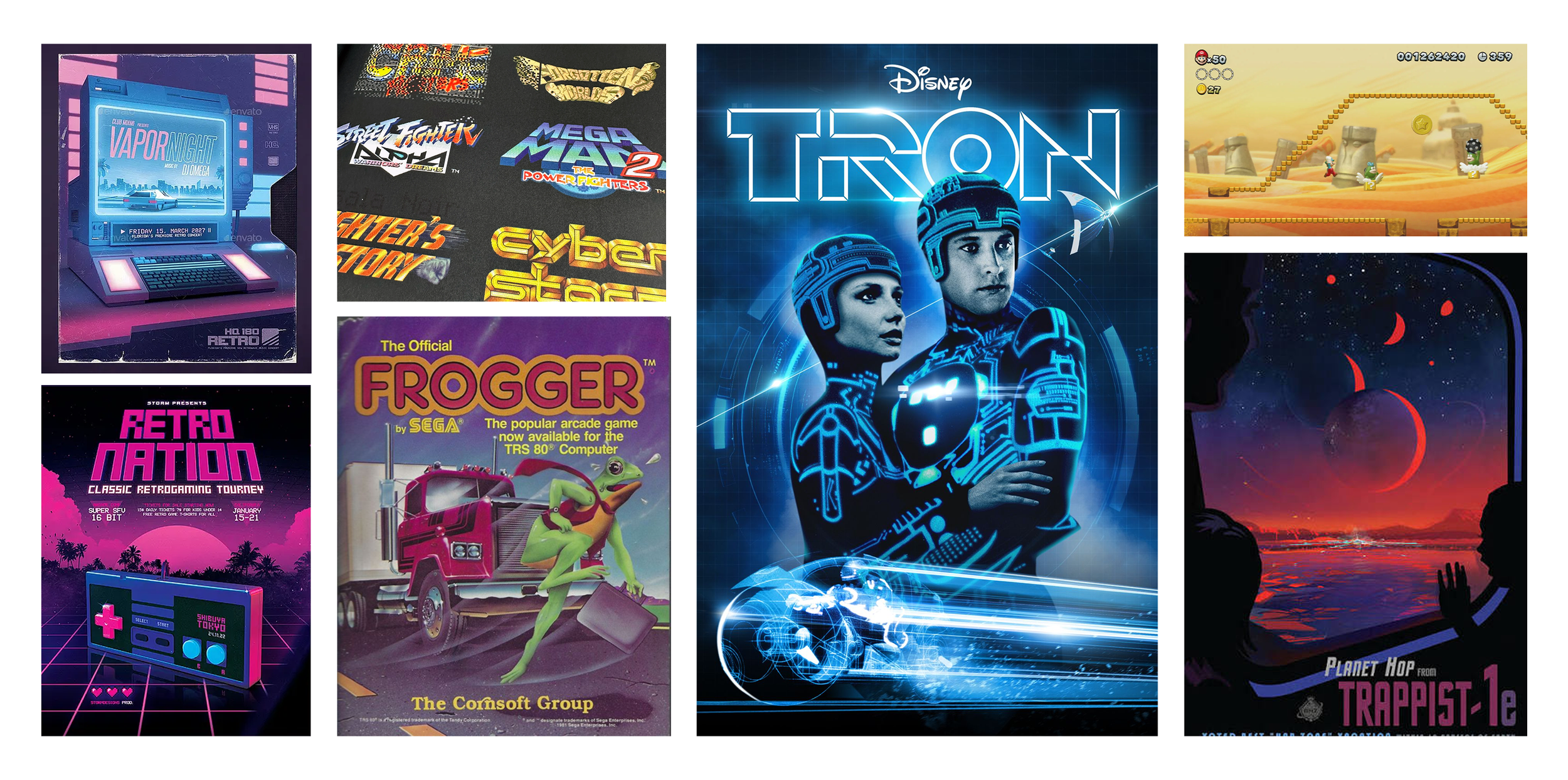
As I scrolled through inspiration, I was struck by retro gaming consoles and 80s synth-pop visuals. Mainframe visualizations, 8-bit typography, and sci-fi worlds were ripe for translation into the Escape concept.
For the gaming itself, I studied arcade games. I watched hours of gameplay clips on Youtube ranging from Frogger, Mario Brothers, and Tron itself.
Architecting the game experience
I started by wireframing the gameplay, which allowed me to properly envision and architect the experience from the top down. I moved game by game, creating the level concept and game approach. For execution, I led the design sprint by divvying up the project into focus areas. Game visuals were owned by my Art Director, games were split amongst 2 Sr Designers, and the content team refined my first pass at copy. We handed off to development in a record 2.5 weeks.
LEVEL 1
The Silo Maze
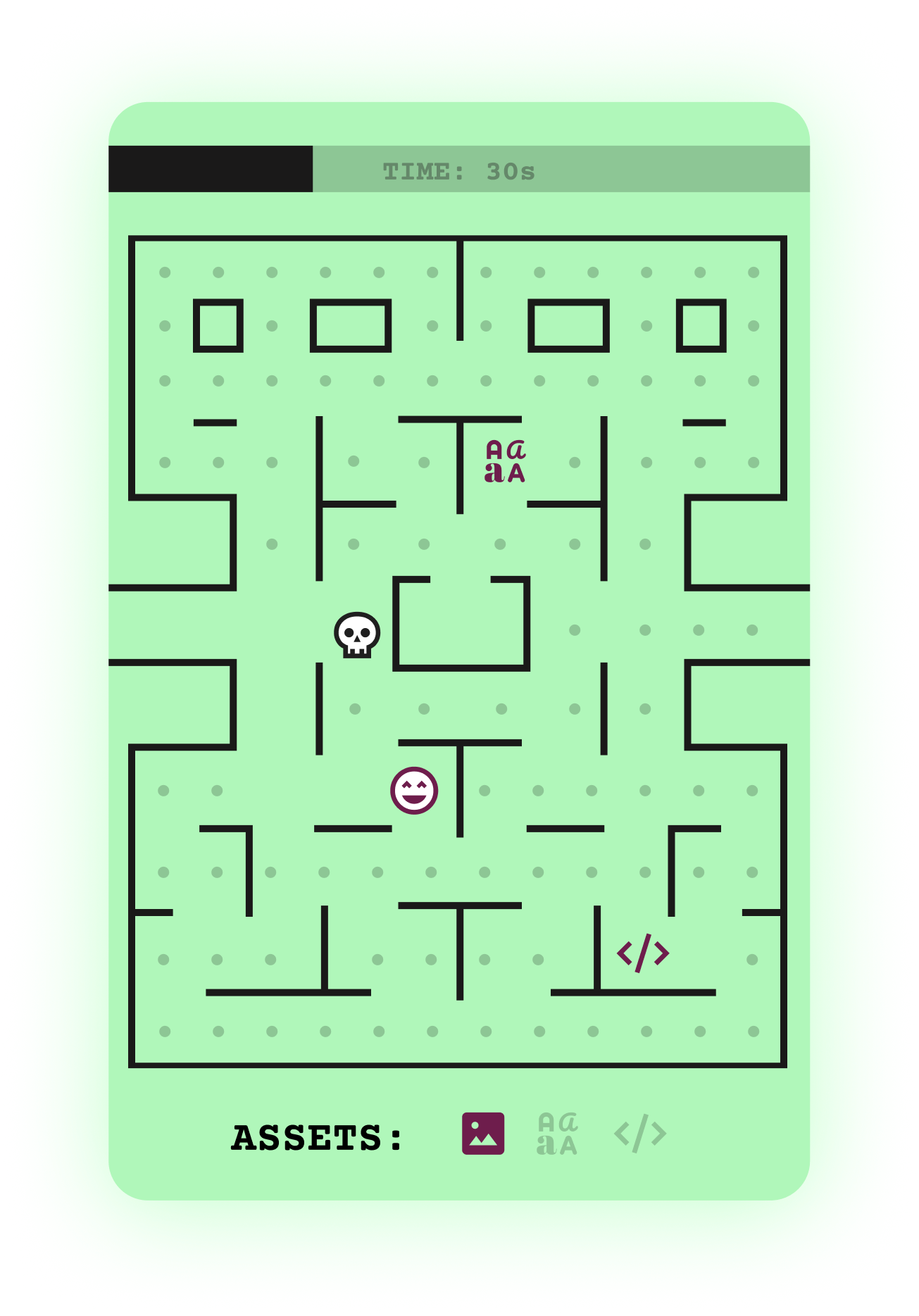
Each level represents a unique world, representative of a legacy CMS pain point. The maze represents the messy underbelly of a traditional CMS system, where users must navigate unnecessarily complicated systems to locate assets, metadata, and more.
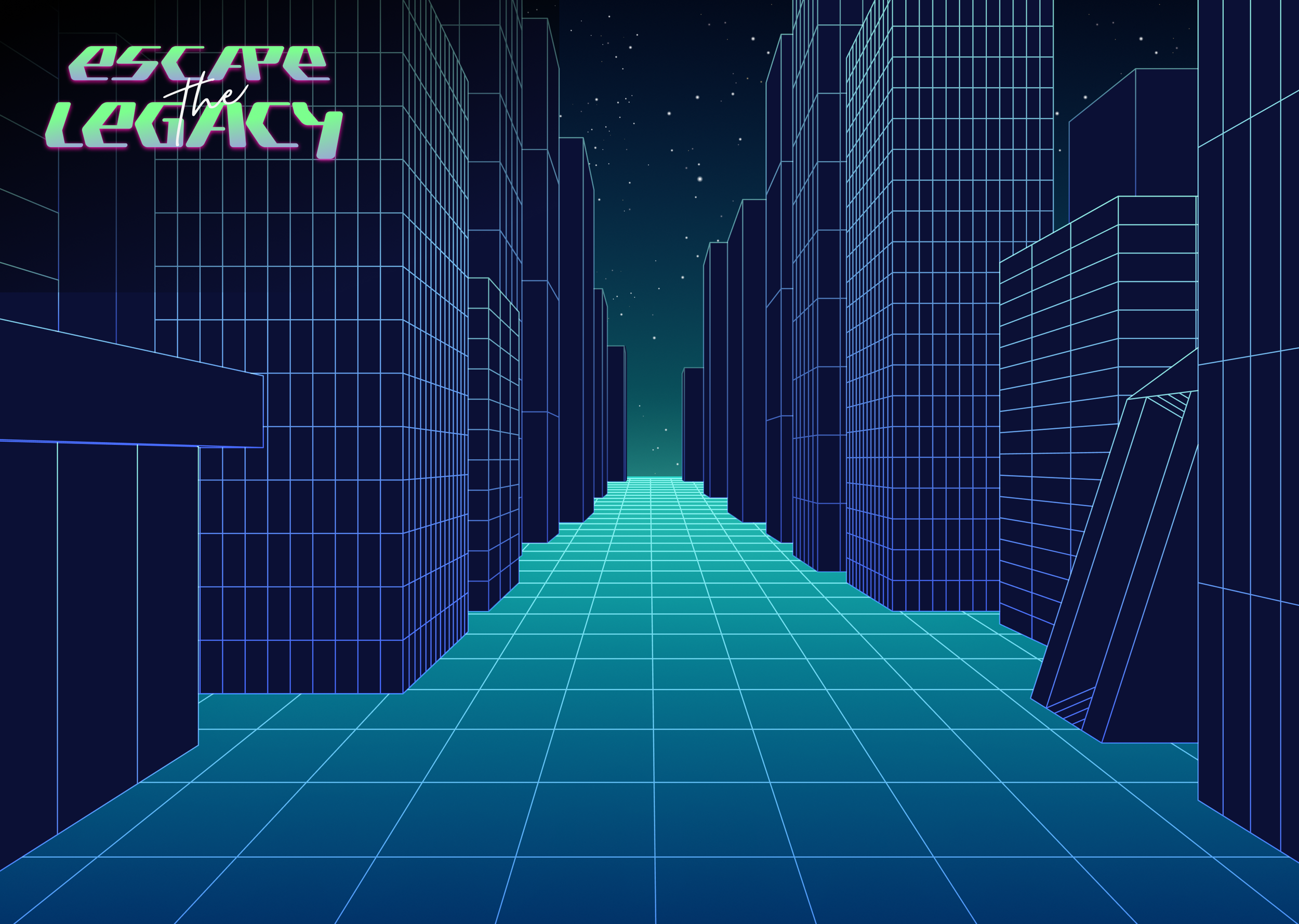
The maze comes to life as a cityscape background at night, where users are invited to explore and find their way out. The game itself sits as a modal on top of each level’s background. Inspired by the beloved Pac Man game model, players must navigate around walls and avoid skulls to pick up an image, content, and metadata. Once they do, they successfully escape level 1 and move on to the next.
Silo Maze
〰️
Developer Bottleneck
〰️
Mirage of the Monolith
〰️
Escape the Legacy
Silo Maze 〰️ Developer Bottleneck 〰️ Mirage of the Monolith 〰️ Escape the Legacy
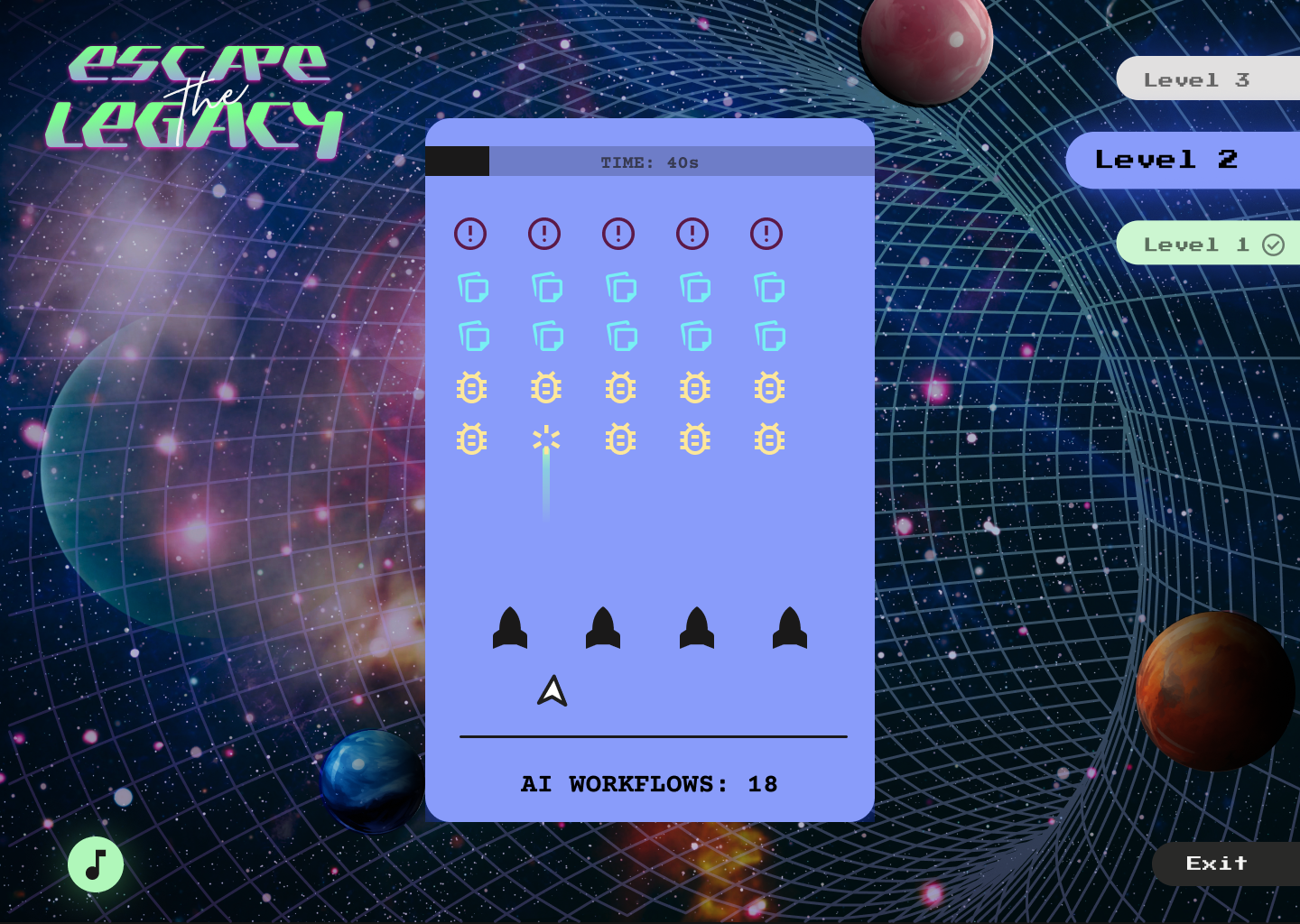
The next and hardest level was modeled after Space Invaders. Players must shoot AI workflows at the wall of developer tickets, alerts, and bugs. Naturally, the level is set in outer space. The legacy frame remains consistent in all the level art, warped amongst bobbing planets and stars.
Level 2
The Developer Bottleneck
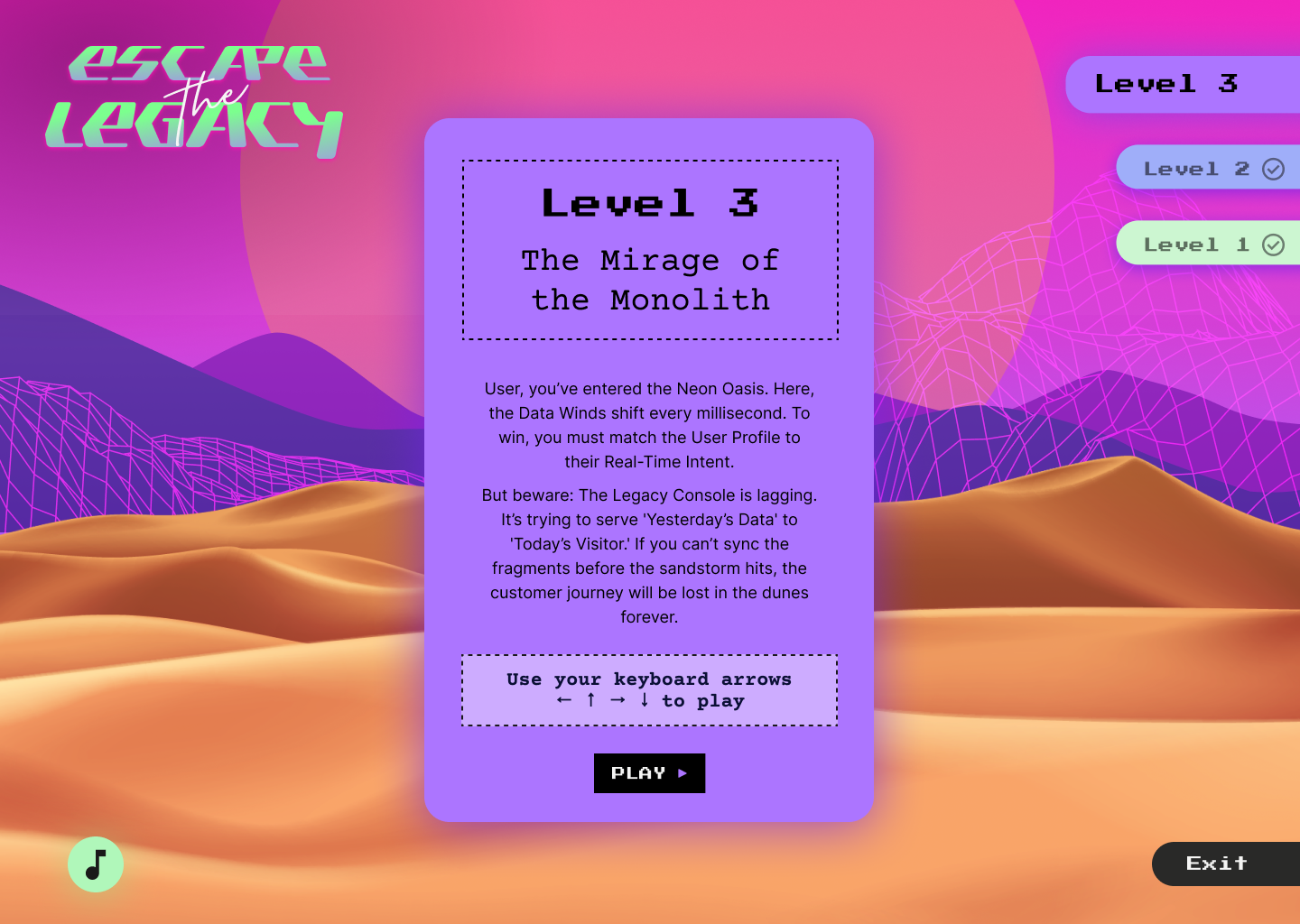
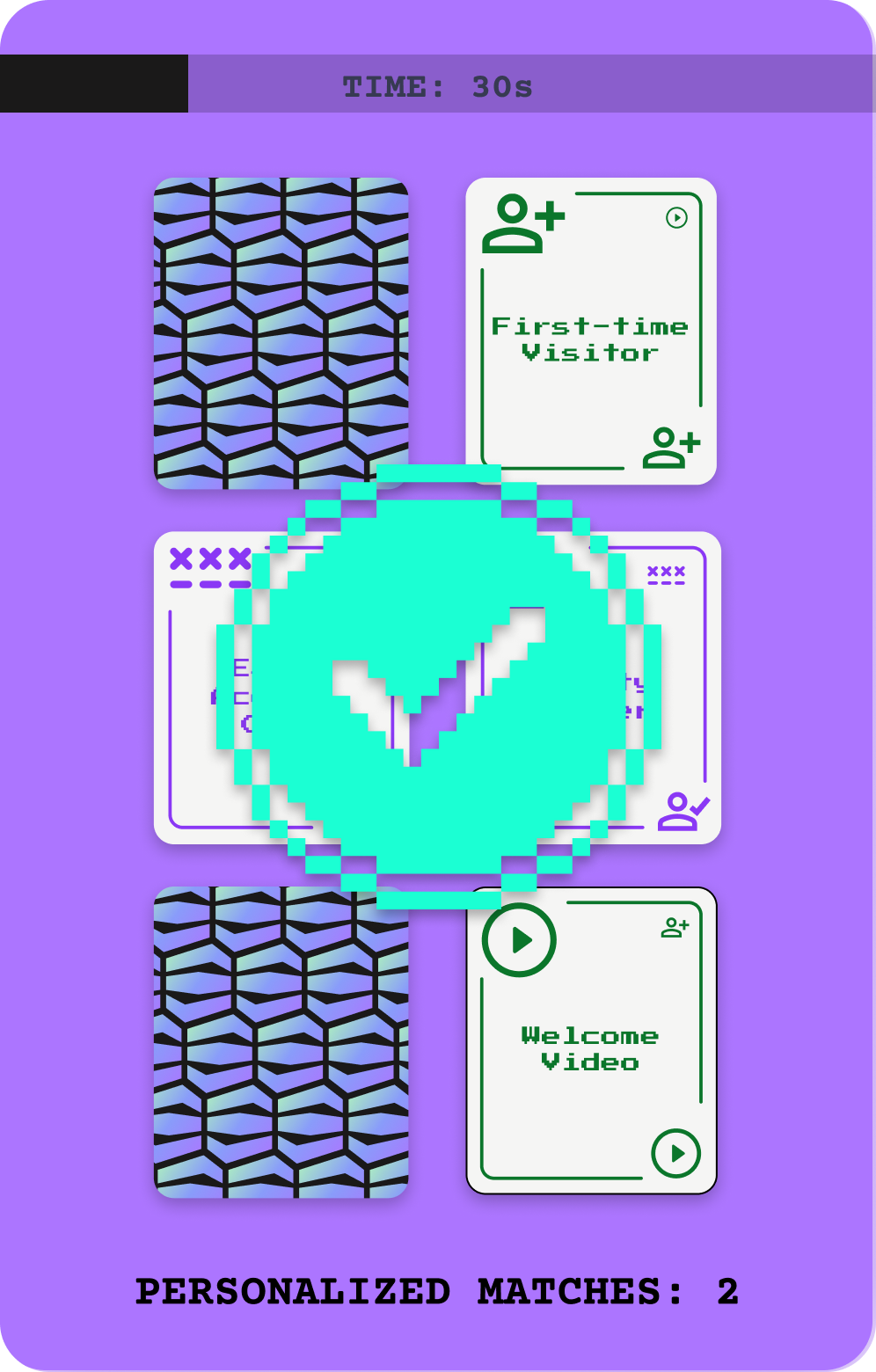
LEVEL 3
The Mirage of the Monolith
Each level represents a unique world, representative of a legacy CMS pain point. The maze represents the messy underbelly of a traditional CMS system, where users must navigate unnecessarily complicated systems to locate assets, metadata, and more.
The maze comes to life as a cityscape background at night, where users are invited to explore and find their way out. The game itself sits as a modal on top of each level’s background. Inspired by the beloved Pac Man game model, players must navigate around walls and avoid skulls to pick up an image, content, and metadata. Once they do, they successfully escape level 1 and move on to the next.